Rishyashringa (Sanskrit: ṛṣyaśṛṅga “deer-horn”; also Ekashringa, Isisinga, Śringi Rishi) is a legendary Vedic sage. He is described as the son of sage Vibhandaka (a son of Kashyapa) and a doe. Born with a horn (hence “deer-horned”), he was raised in a forest by his father and had never seen another human besides Vibhandaka. By austerity he gained great powers – notably, the ability to bring rain – which became the pivotal role in his legends. Famous episodes: Rishyasringa is enticed by courtesans (sent by King Romapāda of Aṅga) to end a drought, marries Princess Śāntā (Romapāda’s daughter), and later officiates King Daśaratha’s Putrakameṣṭhi (fire sacrifice), causing the birth of Lord Rāma and his brothers.
His pastime appears in ancient scriptures: notably the Mahābhārata (Vana Parva) and the Valmiki Ramayana (Bāla Kāṇḍa) and is elaborated in several Purāṇas (e.g. Bhāgavata Purāṇa). Buddhist Jātaka tales (e.g. the Ekasiṅga/Nalinī Jātaka) also adapt his legend. Over time regional traditions arose: the hill Sringeri in Karnataka is named for him (Śṛngagiri “Horned Hill”) and houses his shrine. In Himachal Pradesh (Banjar Valley) and Lakhisarai, Bihar (Shringri Dham), temples honor him locally.
Timeline of Key Events
a. Born of Vibhandaka & deer, with horn
b. Raised in forest by sage Vibhandaka
c. Court maidens sent by King Romapada (Anga) reach Rishyasringa
d. Rains fall on Anga (drought ends)
e. Marriage: Rishyasringa weds Santa (Romapada’s daughter)
f. King Dasaratha calls Rishyasringa to Ayodhya
g. Officiates Putrakameshti Yajna → Birth of Rāma.
h. Rishyasringa retires to forest penance
Biography
R̥ṣyaśṛṅga (also known as Śṛṅgi Ṛṣi) is one of the most extraordinary sages described in the Vedic Literature and Itihāsa. He was the son of the great sage Vibhaṇḍaka, who himself was the son of the Prajāpati-sage Kaśyapa. According to the scriptures, while Vibhaṇḍaka was engaged in severe austerities, he beheld the celestial apsarā Urvaśī and involuntarily released his semen into a river. A doe that came to drink the water consumed it and conceived a child. The doe was actually a celestial being sent by Lord Brahmā for this divine purpose. When the child was born, he possessed a small horn (śṛṅga) on his head, giving rise to the name R̥ṣyaśṛṅga—”the horned sage” or “the sage born of a deer.” After the celestial doe departed, Vibhaṇḍaka raised the boy in complete isolation within the forest hermitage. Having never seen any human being other than his father, R̥ṣyaśṛṅga grew up in perfect innocence, practicing celibacy, austerity, and meditation. Through his purity and intense tapasya, he acquired immense spiritual potency, becoming one of the most powerful ascetics of his age.
At that time, the kingdom of Aṅga, ruled by King Lomapāda, was afflicted by a devastating drought. Having offended the brāhmaṇas and neglected his sacred duties, the king incurred the displeasure of Indra, who withheld rain from the land. The resulting famine brought immense suffering to the people. Learned sages advised the king that only the presence of the supremely pure R̥ṣyaśṛṅga could restore divine favor and bring rain. Since the young sage had never left the forest and knew nothing of worldly life, Lomapāda’s ministers devised an unusual plan. Courtesans, disguised as ascetics, approached him and gradually won his friendship through pleasant conversation, delicious food, and affectionate behavior unfamiliar to him. Eventually they persuaded him to accompany them, leading him aboard a decorated boat that carried him to Aṅga. The moment R̥ṣyaśṛṅga set foot in the kingdom, rain began to pour, ending the long drought and saving the people. In gratitude and to retain the sage’s auspicious presence, King Lomapāda offered his daughter Śāntā in marriage to him. Although Vibhaṇḍaka initially became enraged upon learning that his son had been taken away, his anger subsided when he witnessed the respect shown by the king and the prosperity brought about by his son’s presence. He blessed the marriage and permitted the couple to remain together.
R̥ṣyaśṛṅga later became renowned throughout Bhārata-varṣa not only as a great ascetic but also as a master of Vedic sacrifice. His most celebrated service was performing the Putrakāmeṣṭi Yajña for King Daśaratha of Ayodhyā. As described in the Ramayana, it was through this sacred sacrifice, conducted under R̥ṣyaśṛṅga’s guidance, that the divine sacrificial nectar (pāyasa) was obtained and distributed among Daśaratha’s queens, leading to the births of Lord Rāma, Bharata, Lakṣmaṇa, and Śatrughna. Thus, R̥ṣyaśṛṅga occupies a crucial place in sacred history, serving as the spiritual instrument through whom the earthly appearance of Lord Rāma was facilitated. His life beautifully illustrates the power of purity, austerity, obedience to one’s guru and father, and the transformative influence of saintly association, demonstrating how a sage’s spiritual strength can uplift entire kingdoms and alter the course of divine history.
Primary References to Rishyasringa (Scriptures)
- Valmiki Rāmāyaṇa (Bālakāṇḍa, Sarga 11) – The core narrative: King Daśaratha (childless) is advised by sage Vasiṣṭha and minister Sūmantra to bring Rishyashringa, son-in-law of Anga’s king, to Ayodhya for the Pūtrakamesthī yajña. The Sanskrit verses (Bālakāṇḍa 11.3 and 11.5) describe Śāntā’s birth and Rishyashringa’s invitation. For example, Rāma’s minister recounts: “King Daśaratha will befriend the king of Anga, who will beget a fortunate girl named Śāntā”, and Daśaratha declares, “O virtuous king, I am childless… let the husband of your daughter Śāntā, Sage Rishyashringa, preside over this rite for the sake of progeny in my dynasty”. The Anga king (Romapāda) agrees and sends Rishyashringa. These verses are translated above. (Valmiki does not explicitly call Śāntā Daśaratha’s biological daughter; that is inferred in later tellings.)
- Mahābhārata (Vāna Parva, Tīrtha Yātra Parva, Sections CX–CXIII) – Provides a detailed backstory. The sage Saunaka recounts that Rishyasringa was a great sage renowned for his extraordinary purity, austerity, and spiritual power. He was born to the sage Vibhandaka under miraculous circumstances when a celestial maiden, cursed to live as a deer, conceived after drinking water touched by Vibhandaka’s seminal fluid. Because he was born with a horn on his head, he came to be known as Rishyasringa, meaning “the horned sage.” Raised in complete isolation within the forest, he had never seen any human being except his father and knew nothing of worldly life or women. Absorbed in penance and spiritual practices, he developed immense spiritual potency. At that time, King Lomapada of Anga had incurred the displeasure of the Brahmanas, resulting in a severe drought throughout his kingdom. The sages advised the king that if Rishyasringa could be brought into Anga, rain would certainly fall. To accomplish this, the king sent courtesans who cleverly attracted the innocent sage by disguising themselves as ascetics and introducing him to pleasures he had never experienced before. Eventually, captivated by their association, Rishyasringa left the forest and accompanied them to Anga.
As soon as Rishyasringa entered the kingdom, rain poured from the heavens, ending the devastating drought and restoring prosperity to the land. Overjoyed, King Lomapada offered his virtuous daughter Shanta marriage to the sage. Meanwhile, Vibhandaka became furious when he discovered that his son had been taken away and set out to confront the king. However, seeing the honor, prosperity, and respect given to Rishyasringa, as well as his happy marriage to Shanta, his anger subsided. He blessed the arrangement and instructed his son to eventually return to the forest after fulfilling his household duties. Rishyasringa obeyed his father and later resumed his ascetic life with Shanta’s devoted support. His story illustrates the immense power of purity, celibacy, and austerity, and he remains famous in Vedic history not only for bringing rain to Anga but also for later performing the Putrakameshti sacrifice for King Dasharatha, which led to the appearance of Lord Rama and His brothers.
- Bhāgavata Purāṇa (Śrīmad Bhagavatam 9.23.7–10) – Summarizes these events genealogically. It notes that Dharmaratha (son of Diviratha) begot Citraratha (Romapāda), “who was without issue”. His friend Daśaratha then gives “his own daughter Śāntā” to Citraratha (Romapāda). She “was married to Rishyashringa”. Rishyashringa was brought by heavenly nymphs to perform a sacrifice; at his arrival, “the rain fell”. Thereafter Rishyashringa conducted a son-giving ritual for Daśaratha, “who had no issue,” and Daśaratha obtained sons. The Purāṇa adds that through Rishyashringa’s grace, Romapāda’s line (Caturāṅga and Pṛthulākṣa) also continued. These verses (with Sanskrit text and translations below) confirm Rishyashringa’s role as Daśaratha’s yajña priest, but do not mention Urvaśī or courtesans.
- Viṣṇu Purāṇa (Book III, Chapter 2) – Lists Rishyashringa among the Saptarṣi. King Parīkṣit hears that the current Prajāpati (Aṅgirasa) will be Vyāsa and the seventh of the line is “the sage Ṛṣyasṛṅga”. This ties Rishyashringa into the cosmic sage genealogies of the Paurāṇikas but offers no narrative details beyond his lineage.
- Other Purāṇas (Matsya, Vāyu, Brahmāṇḍa, etc.) – Various Purāṇas repeat these stories or their elements. For example, tradition holds (per wisdom compilations) that Matsya Purāṇa (48.96) and Brahmāṇḍa Purāṇa enumerate Rishyashringa’s penance and his involvement in giving semen for the Putrakāmeṣṭhi Yajña. The Vāyu Purāṇa (99.104, 100.11) also lists him among sages.
(However, finding those verses in available texts is difficult.)
- Buddhist Jātakas – In Buddhist lore Rishyashringa appears as “Isisiṅga” in tales like the Nalinī Jātaka. There is a king’s daughters or courtesans similarly lure an “Unicorn” hermit to break a drought. The Mahāyāna text Mahāprajñāpāramitā-śāstra (2nd c. CE) notes: “The story of the hermit unicorn… seduced by a maiden (princess Nalinī… or the courtesan Śātā) belongs to universal folklore”. (Thus his legend spread across India and beyond.)
Sanskrit Slokas and Translations
Valmiki Rāmāyaṇa (Bālakāṇḍa 11.3, 11.5):
- Verse 1–11–3:
aṅga rājena sākhyaṁ ca tasya rājño bhaviṣyati;
kanyā ca asyā mahābhāgā Śāntā nāmā bhaviṣyati.
“He [Daśaratha] will befriend the king of Anga, and that king will beget a fortunate girl named Śāntā.” - Verse 1–11–5:
anapatyo’smi dharmātmān Śāntā bhartā mamā kratuṁ;
āhāreta tvayā ājñaptaḥ santānārtham kulasya ca.
“O virtuous king, I am childless. Hence, I shall perform a sacred rite. Let the husband of your daughter Śāntā, the sage Rishyashringa, preside over this ritual for progeny in my lineage.”
Mahābhārata (Vāna Parva, Section CXXXI ):
- “A son of Kaśyapa (Vibhandaka) was Rishyashringa, devoted to penance… at that time a horned body of a deer was.” (This narrates his miraculous birth from a deer.)
- “As soon as Rishyashringa’s foot touched the ground of Anga, Indra poured the rain. King Lomapāda then accepted his daughter Śāntā in marriage to that standing sage.”
(These come from Mahābhārata Vāna Parva — Lomāśa’s narration of Rishyashringa’s deeds.)
Śrīmad Bhāgavata Purāṇa (9.23.7–10):
- सुतो धर्मरथो यस्य जज्ञे चित्ररथोऽप्रजा:। रोमपाद इति ख्यातस्तस्मै दशरथ: सखा॥ ७॥
“From Diviratha was born Dharmaratha, whose son was Citraratha (Romapāda). He was without offspring, and Daśaratha was his friend.” - शान्तां स्वकन्यां प्रायच्छद् दाशरथ उवाह याम्। देवाः वर्षति यं रामा आनिन्युर्हरिणी–सुतम्॥ ८॥
“Daśaratha gave his own daughter Śāntā to Romapāda, and she married Rishyashringa. When he was brought [to officiate], the gods began to send rain.” - नाट्य–संगीतवाऽदितैर् विभ्रमालिङ्गनार्हणै: स तु राज्ञोऽनपत्यस्य निरूप्येष्टिं मरुत्वते॥ ९॥
“Rishyashringa was lured by dancing, music and wooing, and he performed the sacrifice.” - प्रजामदात् दशरथो येन लेभेऽप्रजा: प्रजा:। चतुरङ्गो रोमपादात् पृथुलाक्षस्तु तत्सुत:॥ १०॥
“By that yajña Daśaratha, who had been sonless, obtained sons; likewise from Romapāda was born Caturaṅga and from him Pṛthulākṣa.”
Vishnu Purāṇa (3.2.17):
– “…the seventh [Rishi] will be Rishyashringa.” (Daśārṇāgama manvantara lineage listing.)
Comparative Synopsis (with Cross-References)
| Aspect | Valmiki Rāmāyaṇa | Mahābhārata (Vāna Parva) | Bhāgavata Purāṇa / Other Puranas |
| Birth | Not described. (Focus on inviting Rishyashringa.) | Born of a hind after Vibhandaka’s semen is consumed. Horn on forehead (“ekashringa”). | Born miraculously (deer/Hindu origin) (implied in Purāṇic genealogies). Bhāgavata does not detail birth. Vāyu/Brahmaṇḍa list lineage (Kashyapa→Vibhandaka→Rishyashringa). |
| Residence | Lives as son-in-law of Romapāda (Anga king). Goes to Ayodhya. | Raised secluded by father Vibhandaka in forest; later marries Śāntā of Anga and travels (by invitation). | Largely aligned: endures forest penance, then marries Śāntā (daughter of Romapāda). |
| Drought/ Rain | Not mentioned explicitly (assumes Daśaratha already knew legend). | Romapāda’s kingdom suffers dearth; sending Rishyashringa (via courtesans) brings rain. | Explicit: Rains come only when Rishyashringa enters Anga. |
| Marriage | States Śāntā marries Rishyashring. (No father specified for Śāntā.) | Lomapāda gives Śāntā to Rishyashringa in marriage. No mention of Daśaratha here. | Daśaratha gives his daughter Śāntā to Romapāda. Purāṇas take Śāntā as Daśaratha’s by birth. |
| Putrakamesthī Yajña | Daśaratha invites Rishyashringa to officiate, resulting in birth of sons. Rāmāyaṇa narrative does not describe the event in detail, only its outcome (Rama’s birth). | Implied: Rishyashringa was famed for this yajña. (Mahābhārata mention that he “brought about Indra’s rain” and was given in marriage; the Dasharatha yajña is mentioned in passing by Bhāgavata.) | Bhāgavata (9.23.7–10) explicitly says Rishyashringa did a “son-giving sacrifice” for Daśaratha and he got sons. Purāṇic retellings confirm Rāma’s birth by this yajña (e.g. Matsya Purāṇa 48:96). |
| Key Differences | Simplest account. Śāntā’s origin unclear. Vasiṣṭha’s counsel directs Daśaratha to Romapāda. Does not detail Rishyashringa’s past. | Rich detail: explains how Rishyashringa came to marry Śāntā. No mention of Daśaratha’s daughter myth. Focuses on Vibhandaka. | Hereditary emphasis. Bhāgavata credits Daśaratha’s own daughter Śāntā being given to Romapāda. Confirms Rishyashringa’s pivotal role for rain and progeny but otherwise compresses story. |
Cultural Legacy (Temples, Festivals, Names)
- Rishyashringa is still worshiped locally in North and South India. In Himachal Pradesh he is a kuldevatā (family deity) in parts of Kullu. The Banjar (Baggi) village has a Šṛṅgi Rishi Temple with Himachali architecture. Here Rishyashringa (called Skirniṃ Rīśī or “Skirni Deo”) is venerated as a rain-god and protector; his wooden mukhuta (“forehead”—a totemic relic) on Mount Śkiran (12,000 ft) is worshipped and restored periodically. Every year in May priests and villagers perform pūjā there. (A local legend even attributes Kālakūta to Śrī Rishyashringa rather than Śiva, reflecting syncretism.). A second temple in Kullu has both Rishyashringa and Śāntā idols
- In Bihar the Shringi Rishi Dham (Lakhisarai) claims the spot where Rishyashringa performed Rama’s mundan (head-shaving) ceremony. Devotees bring children for tonsure here, and natural hot springs (Śītā-kuṇḍ, “Sita’s Spring”) are said to bless fertility. (Coordinates: 25.12694°N, 86.23428°E.)
- Rishyashringeshwara Temple, Kigga near Sringeri, Karnataka: Sringeri Sharada Peetham’s official history emphasizes that Rishyashringa made Sringeri (originally “Rishyashringagiri”) his ashram. Today a shrine to Rishyashringa (by Adi Śaṅkarācārya’s Mūrtimantapa) stands at Kigga near Sringeri. According to the math’s tradition, Vibhaṇḍaka’s penance site is here.
- Other shrines: In Madhubani, Bihar (Singiya), an ashram site is linked to Rishyashringa (the village name derives from Śṛṅgī). In Himachal (Mandi) and Uttarakhand folklore (and some temples) mention him. Temples or idols may label him “Ekśṛṅga Rīśi” or “Śṛṅgī Rīśī” and often show a horn on the head. (He appears among Kullu’s atthārh kard or 18 deities worshipped by royals.)
Geographical Associations
- Anga (modern Bihar): Romapāda’s kingdom where Rishyashringa brought rain and married Śāntā.
- In Lakhisarai district of Bihar, On the advice of Guru Vashishtha, King Dasharath had the tonsure ceremony of his four sons Rama, Bharata, Laxman and Shatrughna performed at the ashram.
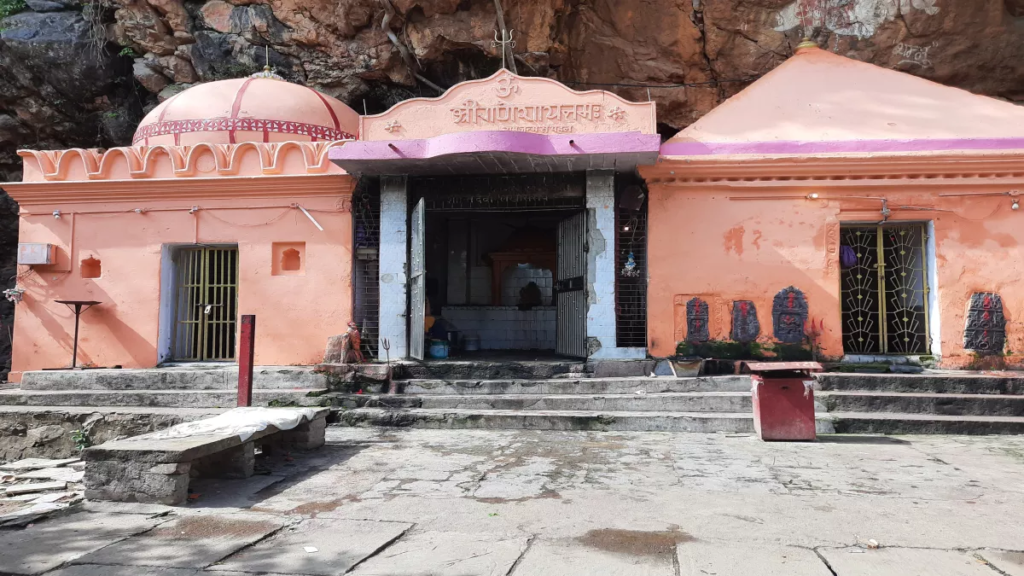
- Ayodhya (Uttar Pradesh): Dasharatha’s capital, site of the Putrakameshti yajna.
- Sringeri/Karnataka: “Rishyashringagiri” where Vibhandaka and Rishyashringa lived in the Western Ghats.
- Baggi (Banjar), Kullu, HP: Local shrine of Shringa Rishi (Banjar Valley).
Thus Rishyashringa legend spans India from the Himalayas to the Deccan, a testament to its pan-Indian reach.
Sloka Reference: https://www.valmikiramayan.net/utf8/baala/sarga11/balaitrans11.htm
https://sacred-texts.com/hin/m03/m03113.htm
https://sacred-texts.com/hin/m03/m03110.htmhttps://vedabase.io/en/library/sb/9/23/7-10/